

I define what “How to Manage IT Projects Effectively” means in real work. I lay out clear aims: predictable delivery, measurable value, controlled risk and a route to project success without burning out the team.
Many initiatives stall early — 75% of executives say projects feel doomed from the start. That usually traces back to fuzzy direction and weak alignment with wider business goals. I tackle that from day one, so teams move with purpose.
I will walk you through setting scope and goals, choosing a delivery approach, running the work and closing cleanly with a proper handover. The advice is practical and based on common constraints like integrations, software delivery and infrastructure changes.
This guide is for modern teams, technical leads and anyone acting as the project manager. Read on and copy simple routines into your own management practice immediately.


Main Points
- Clear goals and aligned value reduce early failure.
- Predictable delivery requires disciplined scope control.
- Pick a method that suits team skills and risk tolerance.
- Use governance and simple rituals for steady progress.
- Prevent burnout with realistic plans and measurable outcomes.
- Practical examples keep advice grounded in real constraints.
How to Manage IT Projects Effectively: my practical approach for modern IT teams
I define practical project management as turning complex technical work into small, verifiable deliveries that show business value. I plan, execute and control each phase so the right solution ships on time and with proof that it works.
What I mean by project management in practice
Project management here covers software lifecycles, architecture choices, data moves and integration effort. I keep a single source of truth and a clear cadence so the team knows what to build next.
Why specialised management beats generic processes
Generic processes fail when environments, dependencies and release windows need tighter coordination. I create lightweight processes that force decisions early and reduce late rework.
Aligning technology work with business outcomes from day one
I translate technical tasks into outcomes such as faster response times, fewer incidents and better security. I involve stakeholders early so sign‑offs are part of the plan, not a blocker.
- Core skills: prioritisation, clear communication, risk thinking.
- Measures: delivery predictability, quality signals, reduced rework.
| Aspect | Generic process | Specialised approach |
|---|---|---|
| Decision speed | Slow, layered approvals | Fast, empowered decisions |
| Visibility | Periodic reports | Continuous, shared dashboard |
| Risk control | Reactive fixes | Proactive mitigation and testing |
What makes IT project management different from other projects

Technology work hides interlocks that make delivery unpredictable unless you map them early.
Technical complexity comes from software, infrastructure and data moving together. These layers create hidden dependencies that only appear when environments, permissions or integrations run end‑to‑end.
Technical complexity and hidden dependencies
I surface those links by mapping systems, interfaces, owners and release windows up front. That mapping turns assumption into evidence.
Risk looks different: integrations, downtime and security
In my work a small code change can cause downtime, data corruption or a failed integration that cascades across services. I treat those events as real risk and plan mitigations early.
- I engineer quality from the start with test strategies, performance targets and representative environments.
- I call out common challenges: unclear ownership, brittle integrations and poor operational readiness.
- My process keeps technical uncertainty visible so project decisions rest on evidence, not optimism.
Setting the foundation with clear goals, scope and project requirements
Before timelines or tools, I lock down objectives and the exact boundaries of delivery. This gives the team a shared target and makes later decisions easier.


How I write a scope statement that prevents scope creep
I write a short, testable scope statement that lists what the system will do and what it will not do. I state explicit exclusions so silent expansion is visible.
Defining acceptance criteria, performance benchmarks and integration points
I record clear acceptance criteria that are measurable and verifiable. I add performance targets — latency, throughput and error budgets — and list integration points such as APIs and auth flows so surprises are rare.
Feasibility checks I use before committing budget and time
Before I commit time or budget I check technical constraints, environment readiness and security needs. I confirm dependency owners’ availability and validate that project requirements are realistic.
| Item | What I record | Purpose |
|---|---|---|
| Scope | In-scope and out-of-scope list | Prevent scope creep and guide decisions |
| Acceptance criteria | Pass/fail tests and metrics | Make “done” objective |
| Performance | Latency, throughput, error rate | Avoid late performance fixes |
| Feasibility | Technical checks and owner sign-off | Reduce rework and wasted time |
Choosing the right methodology for the work
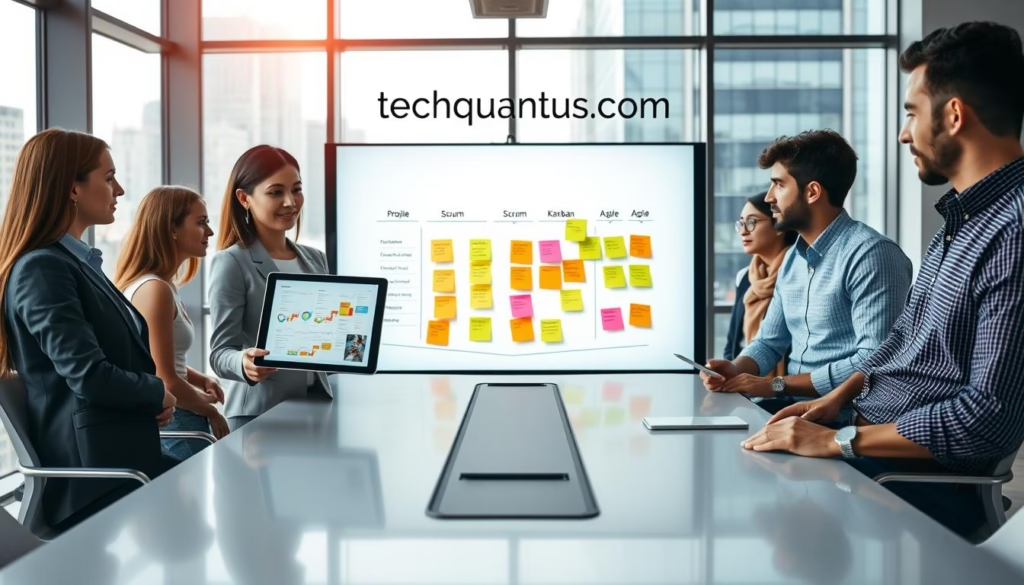
I decide on a method by testing whether scope is fixed, feedback will change priorities, or work arrives unpredictably.
When I use Waterfall for fixed requirements and approvals
Waterfall suits projects with well-defined requirements and heavy approval gates. I pick it for infrastructure upgrades, compliance work and tasks that need formal sign‑off.
When Agile works best for evolving software development needs
Agile fits when user feedback and market change shape priorities. I use it for iterative software development that benefits from short learning cycles.
How I run Scrum sprints for transparency and incremental delivery
I run disciplined sprints of 2–4 weeks. Sprint goals, a visible backlog and clear task breakdown keep teams honest and make progress measurable.
Where Kanban fits for support, maintenance and continuous delivery
Kanban works for support queues and continuous delivery where work arrives unpredictably. I limit work‑in‑progress and tune workflows so issues move faster.
| Method | Best use | Effect on planning |
|---|---|---|
| Waterfall | Fixed scope, approvals | Deep upfront planning |
| Agile/Scrum | Evolving software development | Iterative planning and review |
| Kanban | Support and maintenance | Continuous flow, light planning |
Tools and workflows must match team maturity. I choose tools that reduce admin and keep the process focused on delivery, not paperwork.
My IT project lifecycle: from initiation to closure
I break the lifecycle into five clear phases so the team knows what success looks like at each handover.
Initiation
I secure stakeholder buy‑in with a short charter that states the business case, scope boundaries and decision owners.
This document makes the project’s purpose visible and stops silent scope changes.
Planning
I build a roadmap, a budget view, a resource model and milestone plan.
I set the operating rhythm of meetings so everyone knows when and what to update.
Execution
Execution is coordination: I remove blockers, protect team members from distractions and keep the project team focused on top priorities.
Monitoring and control
I track KPIs and leading indicators, not just task completion. That gives early warning about slipping progress.
Change requests pass a simple impact check so resources and scope stay balanced.
Closure
Closure includes a post‑project review, final documentation and a structured handover to operations.
That final step reduces run‑time errors and keeps stakeholders confident.
“Clear handovers and evidence of value are the difference between a delivered tool and an adopted outcome.”
- I make the lifecycle repeatable across teams and setups.
- I keep stakeholders informed at each phase to reduce surprises.
- I ensure resources are visible so planning stays realistic.
How I plan an IT project that is realistic and measurable

I start every plan with evidence: past delivery data, time tracking and clear comparisons. This grounds timelines and prevents optimistic guesses from driving scope.
Estimating time with evidence
I use historic delivery records and logged effort to estimate time for similar tasks. I prefer ranges over single numbers and add explicit buffers for reviews, testing and rework.
Mapping tasks, dependencies and the critical path
I break work into small tasks and map dependencies so the critical path is visible. That makes risk areas obvious and helps me prioritise mitigation early.
Resource planning that protects quality
I size capacity realistically and spread resources so quality remains steady. I limit work in progress, schedule focus blocks and reserve contingency for unplanned fixes.
“Plans backed by real data expose trade-offs and keep delivery honest.”
- I set expectations with other managers about speed versus robustness.
- I track progress with burn charts, milestone health and trending defects.
- I balance workload to avoid burnout and keep measurable outcomes central.
Design and development: keeping the solution aligned with user needs
I turn vague needs into interactive prototypes that show value before full software development begins.
Turning requirements into designs, prototypes and specifications
I take requirements and make them tangible. I sketch wireframes, build quick prototypes and invite stakeholders to give early feedback.
This approach validates needs and saves costly rework later. The specification stays short, clear and testable for both technical and non‑technical reviewers.
Keeping architecture decisions traceable and stakeholder-friendly
I record each architecture decision: the choice, the alternatives, and the expected impact on performance and maintainability.
This trace helps the team justify changes and helps stakeholders see trade‑offs that affect the final solution.
Quality assurance embedded early, not bolted on
I embed QA from the first prototypes. Test plans, automation targets and entry/exit criteria sit beside requirements so quality is measurable at every stage.
I also manage data concerns — migration steps, integrity checks and interface contracts — so data risks do not appear late in the project.
| Item | What I capture | Why it matters |
|---|---|---|
| Prototype | Interactive demo and user notes | Validates needs and reduces rework |
| Specification | Readable requirements and acceptance tests | Guides development and non‑technical review |
| Architecture log | Decision, alternatives, impact | Improves maintainability and performance |
| Data plan | Migration, checks, contracts | Prevents late data issues |
“Short feedback loops and clear specs keep the solution focused on user needs.”

Communication and stakeholder management that actually works
I shape updates so technical progress reads as concrete gains for the organisation.
I keep communication simple and purposeful. Clear channels and consistent updates cut confusion and reduce noise.
Translating progress into business value
I convert technical metrics into business outcomes — for example, “response times improved by 40%” or “error rate down 60%”. That helps stakeholders see speed, reliability and security as measurable wins.
Meeting rhythm and focus
I use short stand-ups for the team, structured status updates for delivery owners and stakeholder reviews that focus on decisions and risks.
Each meeting has a clear purpose and a required output: unblock, decide or report.
Audience-tailored updates and transparency
I give executives a concise view and delivery teams the detail they need for fast blocker resolution. Written updates and predictable review points keep distributed teams aligned.
Single source of truth and supporting tools
I enforce one shared repository for documentation and dashboards. Tools are useful only when teams agree definitions and keep data current.
| Purpose | Audience | Typical output |
|---|---|---|
| Stand-up | Team | Daily blockers and plan |
| Status update | Delivery owners | Milestone health and risks |
| Stakeholder review | Stakeholders | Decisions, trade-offs, business impact |
| Shared docs/dashboard | All teams | Single source of truth |
“Clear, tailored communication turns technical work into visible business value.”
Risk management practices I rely on for IT projects
I treat risk as an ongoing task, not a document filed at project close. Good management makes the project resilient and keeps the team calm when requirements shift.
Maintaining a risk register for technical and business threats
I keep a simple register that lists probability, impact, an owner, mitigation actions and trigger conditions. Each entry is reviewed at least weekly so issues are tracked, not forgotten.
Handling cybersecurity and information security throughout delivery
Security is continuous work. I embed threat checks, code analysis and access reviews into the delivery process rather than leaving them for the final checklist.
Change control that prevents chaos when requirements shift
I run a strict triage for changes: quick impact assessment, documented decision and explicit approval. That links change control back to project scope discipline so justified changes can proceed without derailing the plan.
“Risk thinking shapes my plans: buffers, staged rollouts and clear rollback steps cut avoidable disruption.”
- I watch specific technical threats: failed integrations, cutover downtime, data migration errors and dependency slippage.
- I explain risk in business terms for stakeholders: cost, uptime and customer impact rather than only technical detail.
- These practices keep the management process focused and the project scope deliverable.
Managing the project team: roles, responsibilities and performance
I make responsibilities explicit and match tasks to individual skills and capacity. Clear role definitions stop work slipping between people and keep momentum steady.
Key roles I expect on an IT project team
- Project manager for planning, risk and stakeholder updates.
- Business analyst who owns requirements and acceptance criteria.
- Technical lead or architect who signs architecture choices and guides developers.
- Developers, QA engineers, UI/UX designers, DevOps and subject matter experts (security, compliance).
How I assign tasks by skills, capacity and learning
I map current skills and available capacity before I allocate work. That prevents single points of failure and spreads knowledge.
I balance delivery needs with learning opportunities so members grow without risking timelines. This keeps the team resilient.
Leading distributed teams across time zones
I set small overlap windows for handovers and use concise written updates for quiet hours. Handover notes include status, next actions and blockers.
I secure essential resources early — access, environments and vendor time — so sprints do not stall mid-delivery.
“Focus on outcomes, flow and quality signals rather than hours; that makes performance fair and measurable.”
| Role | Primary responsibility | Performance signal |
|---|---|---|
| Project manager | Plan, remove blockers, stakeholder alignment | Milestone health and delivery predictability |
| Technical lead | Architecture, technical decisions, code quality | Defect rate and deploy stability |
| QA / Test | Test strategy and verification | Test coverage and regression counts |
| DevOps / Sysadmin | Environments, deployments and runbook readiness | Release success and incident frequency |
Essential tools and software I use to manage projects and work in one place
I pick tools that match team maturity and project scale rather than chasing every feature.
Jira is my default for Agile delivery. I use it for sprint planning, backlog grooming, issue tracking and visible Scrum or Kanban boards. Dashboards surface progress, while filters keep release scope clear.
Asana for cross-functional task management
Asana works when timelines and non-technical stakeholders matter. I map tasks, assign owners and lay out timelines so everyone sees dependencies without deep tooling training.
Trello for lightweight Kanban
Trello is ideal for small teams and fast flows. Boards, lists and cards let me visualise work quickly and keep WIP limits obvious.
Microsoft Project for complex scheduling
For large initiatives I rely on Microsoft Project. It handles detailed schedules, dependency mapping and resource allocation across many teams.
Standardisation matters: I enforce naming conventions, workflows and statuses so reporting is reliable. I attach documentation to issue tickets so audits and handovers are straightforward.
| Tool | Best use | Key feature I use |
|---|---|---|
| Jira | Agile teams, sprint work | Boards, backlog, dashboards |
| Asana | Cross-functional timelines | Timeline view, task assignments |
| Trello | Small teams, quick Kanban | Cards, lists, WIP control |
| Microsoft Project | Enterprise scheduling | Dependency mapping, resource levelling |
“Pick the right tool for the work, then make the tool predictable through standards and linked documentation.”
Common IT project challenges I anticipate and how I overcome them
I set clear trade‑offs so sponsors choose between speed and measured risk. Anticipating common challenges lets me present options that balance delivery and certainty.
Unrealistic deadlines and speed-versus-quality. I outline explicit risk levels and present clear options: accelerate with higher rollback risk or slow down with staged releases. I protect delivery by prioritising the critical path, trimming non‑essential scope and keeping testing non‑negotiable.
Poor alignment with stakeholders and communication gaps. I build shared terminology and short artefacts that both teams and business owners read. Regular decision‑focused reviews stop assumptions and reduce rework.
Changing technology and obsolete choices. I set evaluation criteria, favour modular designs and time‑box research so decisions land quickly and remain adaptable.
- I tighten intake and require impact assessments to limit scope creep.
- I centralise updates and use one dashboard so distributed teams keep the same facts.
- I limit work in progress and escalate trade‑offs early so multiple projects keep moving.
“Predictable delivery, fewer surprises and smoother adoption are the measures I track for project success.”


Conclusion
I tie technical delivery back to business value with a short, evidence-based summary and a clear handover plan. ,
My end-to-end approach rests on four pillars: clear scope, the right methodology, disciplined delivery and a strong closure that includes post-project review and documentation handover.
I stress planning with evidence, controlling change, communicating plainly and keeping risk visible. Good project management connects technical work to measurable outcomes rather than following a framework blindly.
The project manager organises decisions, expectations and momentum across teams. The right tools help, but only when paired with consistent habits, clear ownership and reliable data.
Use retrospectives and post-project reviews to refine templates, estimates and governance for the next effort.
FAQ
What exactly do I mean by IT project management in practice?
I mean coordinating people, processes and technology so that a software, infrastructure or data initiative delivers defined business outcomes. That includes setting clear scope and requirements, selecting an appropriate methodology, tracking progress with measurable KPIs and ensuring a smooth handover to operations or users.
Why do I say IT projects need specialised management rather than generic processes?
IT work carries technical complexity, hidden dependencies and security considerations that generic project templates miss. I apply specialised practices — architecture traceability, integration testing and robust risk controls — so delivery meets functional, performance and compliance needs.
How do I align technology work with business outcomes from day one?
I start with business goals, define acceptance criteria and translate those into measurable features and performance benchmarks. I involve stakeholders early, maintain a single source of truth for requirements and prioritise work that delivers the highest business value first.
What makes IT project management different from other project types?
Technical complexity, frequent changes and cross-system dependencies set IT apart. Work often spans development, operations and data teams, so I emphasise integration planning, automated testing and continuous delivery to reduce risk and speed feedback.
How does risk look different in IT projects?
Risks include integration failures, downtime, data loss and security vulnerabilities. I keep a living risk register, assign owners, run mitigation rehearsals and embed cybersecurity controls throughout delivery rather than treating them as an afterthought.
How do I write a scope statement that prevents scope creep?
I make scope specific and measurable: features, interfaces, performance targets and exclusions. I document acceptance criteria and change-control rules so any new request is evaluated against impact to timeline, cost and quality before approval.
How do I define acceptance criteria and integration points?
I write acceptance criteria as testable conditions tied to user stories or requirements and list integration points with data formats, APIs and services. That makes end-to-end verification straightforward and reduces surprises at handover.
What feasibility checks do I run before committing budget and time?
I validate technical approaches with spike tasks, review architecture constraints, confirm third-party dependencies and estimate using historical data. If feasibility gaps appear, I recommend phased delivery or proof-of-concept work first.
When do I choose Waterfall over Agile?
I use Waterfall when requirements are fixed, regulatory approvals are mandatory and scope changes are costly. For predictable, linear delivery with clear governance, Waterfall can provide the structure stakeholders need.
When is Agile the better option for IT work?
I prefer Agile when requirements will evolve, user feedback is crucial and I need incremental value delivery. Agile helps teams adapt quickly, prioritise features and reduce risk through short feedback loops.
How do I run Scrum sprints for transparency and incremental delivery?
I set clear sprint goals, keep daily stand-ups short, use a visible backlog with prioritised stories and hold regular sprint reviews and retrospectives. That discipline keeps stakeholders informed and improves team performance each cycle.
Where does Kanban fit in my approach?
I use Kanban for support, maintenance and continuous delivery where work arrives unpredictably. Limiting work-in-progress and visualising flow helps resolve bottlenecks and maintain steady throughput.
How do I get stakeholder buy-in during initiation?
I create a concise project charter that states objectives, benefits, scope, risks and success metrics. I present the charter to sponsors, clarify decision roles and secure commitments for resources and governance.
What does my planning phase include?
Planning covers the roadmap, milestones, budget, resource allocation and a realistic schedule. I map dependencies, set acceptance criteria and define communication rhythms so execution is predictable.
How do I coordinate delivery across a project team during execution?
I assign clear roles, maintain an up-to-date backlog, run regular syncs and use tools that centralise tasks and documentation. Clear escalation paths and daily visibility prevent misunderstandings and delays.
Which KPIs and controls do I monitor during delivery?
I track progress with velocity, cycle time, defect rates, test coverage and milestone completion. I use change requests and variance reporting to control scope, cost and schedule deviations.
What are my closure activities after delivery?
I run a post-project review, capture lessons learnt, finalise documentation, complete knowledge transfer and confirm acceptance with stakeholders. That ensures operational readiness and continuous improvement.
How do I estimate time realistically?
I base estimates on historical data, time tracking and task-level breakdowns. I include buffers for integration and unplanned work and revisit estimates as I gain evidence during delivery.
How do I map tasks, dependencies and the critical path?
I decompose work into tasks, identify predecessor relationships and use scheduling tools to visualise the critical path. That highlights tasks that directly affect the finish date so I can prioritise resource focus.
How do I plan resources to avoid burnout and protect quality?
I balance workload using capacity planning, limit concurrent assignments and schedule regular rest periods. I prioritise hires or contractors where skills gaps threaten delivery quality.
How do I translate requirements into designs and prototypes?
I create user journeys, wireframes and working prototypes that stakeholders can interact with. Early validation reduces rework and clarifies acceptance criteria for developers and testers.
How do I keep architecture decisions traceable?
I record decisions, alternatives considered and rationale in an architecture decision log. That makes change impact assessments faster and helps new team members understand past choices.
When do I introduce quality assurance?
I embed QA from the start with test-driven practices, automated tests and continuous integration. Finding defects early lowers cost and keeps releases stable.
How do I communicate technical progress in business terms?
I convert technical achievements into outcomes: customer impact, revenue potential, risk reduction or time saved. Short dashboards and executive summaries make status meaningful for non-technical stakeholders.
What meeting rhythms do I use for effective governance?
I run brief daily stand-ups, weekly status updates and monthly stakeholder reviews. I keep meetings focused, time-boxed and outcome-driven so they add value rather than consume time.
How do I improve transparency with documentation?
I keep requirements, designs, source control and release notes in a single source of truth like Confluence or a shared repository. Versioned documents and accessible runbooks reduce dependency on tribal knowledge.
How do I maintain a useful risk register?
I log each risk with probability, impact, owner and mitigation actions. I review the register regularly, escalate when thresholds are breached and test mitigations where possible.
How do I handle cybersecurity during delivery?
I integrate security reviews, threat modelling and automated scans into the pipeline. I involve security engineers in design decisions and require remediation gates before production releases.
What change control practices prevent chaos?
I require documented change requests, impact analysis and approval from designated authorities. Minor changes follow a fast-track process, while larger ones need re-planning and budget approval.
Which key roles should an IT project team include?
I expect a project sponsor, project manager, product owner, lead developer, QA lead, solution architect and operations owner. Clear role definitions prevent overlap and gaps.
How do I assign tasks based on skills and capacity?
I match work to capability while giving team members growth opportunities. I account for current workload, expected effort and critical path priorities when assigning tasks.
How do I lead distributed teams across time zones?
I set core overlap hours, use asynchronous updates, keep documentation current and schedule inclusive meetings. Respecting time differences and using reliable collaboration tools keeps momentum.
What essential tools do I use for project management?
I use Jira for Agile delivery, Asana for cross-functional planning, Trello for light Kanban boards and Microsoft Project for complex schedules. I choose tools that integrate with source control and CI/CD pipelines.
How do I handle unrealistic deadlines and the speed-versus-quality trade-off?
I present evidence-based estimates, propose phased delivery and show the cost of technical debt. When speed is essential, I protect a minimum quality baseline with automated tests and rollback plans.
What do I do about poor communication between technical teams and stakeholders?
I establish regular demos, simple dashboards and a glossary of terms. I encourage shared artefacts and foster a culture where questions are welcomed and answered promptly.
How do I avoid technology decisions that become obsolete mid-project?
I choose mature, well-supported platforms, prefer modular designs and validate proof-of-concepts early. I plan for migration paths and avoid locking the project into unproven proprietary stacks.
What specific steps do I take to prevent scope creep?
I document baseline scope, set a formal change-control process and prioritise a backlog against business value. I refuse informal additions without impact analysis and sponsor approval.
Related posts:
 CISSP Domain 2: Guide to Asset Security Fundamentals
 Top 7 Free Web Tools to Boost Productivity
 Quantum Computing Basics for Beginners: A Simplified Guide
 I Use Prompt Engineering Templates That Work Across ChatGPT, Gemini, Claude & Grok
 I Use Small Business AI Stack: Affordable Tools to Automate Support, Sales, Marketing
 Sustainable & Green Energy Solutions for Next‑Gen Data Centers Trend Report