
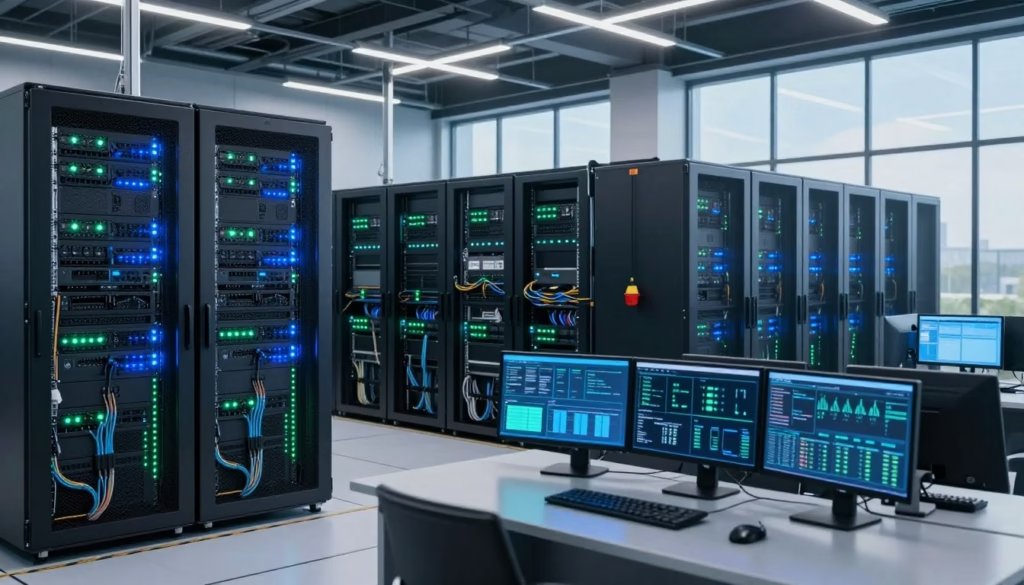
I set the scene: modern organisations rely on a well‑designed data center as the operational heart of the enterprise, not just a store of information.
I explain how my approach balances security, continuity, performance and efficiency to help businesses cope with growth. Capacity demand rises fast, so planning and installation must be efficient to protect uptime.
I map the end‑to‑end layout from compute and storage to facility systems and management tools. I cover power, cooling, network gear and DCIM, and I reference ANSI/TIA‑942 tiers to show how redundancy supports resilience.
My aim is practical: to give readers frameworks and measurable metrics like PUE and availability so designs deliver tangible outcomes for user experience and cost control.
Get your copy now! Change your focus, change your stress. Limited editions

Key Takeaways
- Modern data centres are operational hubs; design affects business continuity and performance.
- I balance security, resilience and efficiency across power, cooling and network systems.
- ANSI/TIA‑942 tiers, DCIM and PUE are key frameworks I use for measurable results.
- Workloads span on‑premises, edge and multicloud, so designs must integrate smoothly.
- Practical details on servers, storage arrays and telemetery show how theory becomes implementation.
Foundations: What a data centre is today and why it matters
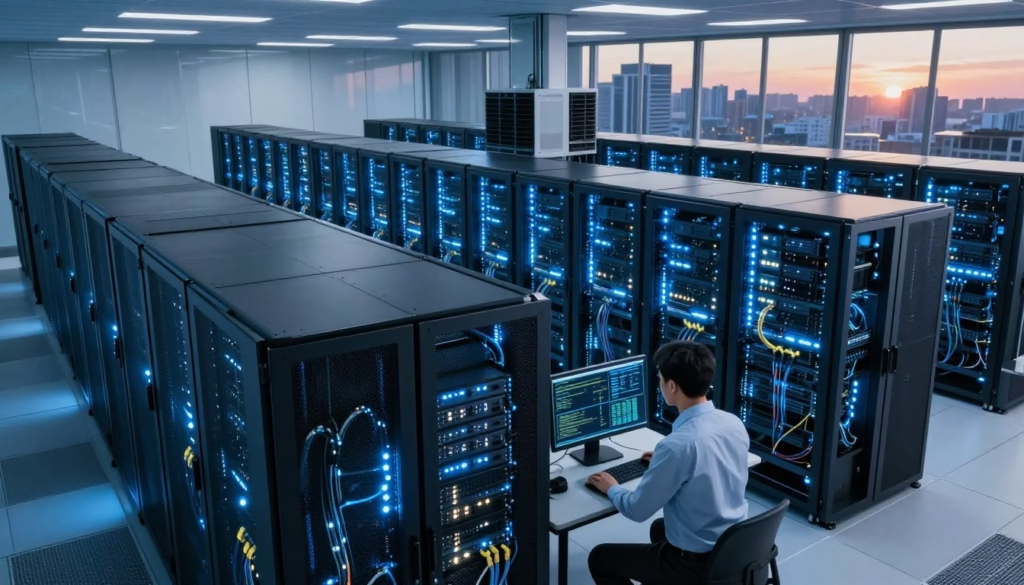
I frame the modern facility as a set of linked environments—on‑prem halls, edge locations and cloud regions—that operate as a single platform for computing and information services. This view helps me choose where workloads sit, balancing latency, compliance and cost.
Defining a modern platform across on‑prem, edge and multicloud
A data center now spans physical halls, edge nodes and public or private clouds. Virtual networks, containers and microservices let me move workloads to the place that best meets performance or regulatory needs.

Present‑day business drivers
My architecture decisions rest on four pillars: security to protect assets, continuity to keep services running, performance to meet users’ expectations and efficiency to control spend and emissions.
- I run CRM and ERP near data stores for throughput and compliance.
- I place content delivery and real‑time analytics at the edge to cut latency.
- I stitch sites together with diverse networking paths and high‑bandwidth links so operations stay predictable.
As capacity grows roughly 33% a year, location, connectivity and power efficiency become material to risk and cost. Clear requirements for infrastructure and centre design make trade‑offs visible to stakeholders.
Understanding Data Centre Architecture: Core Components Every IT Pro Should Know
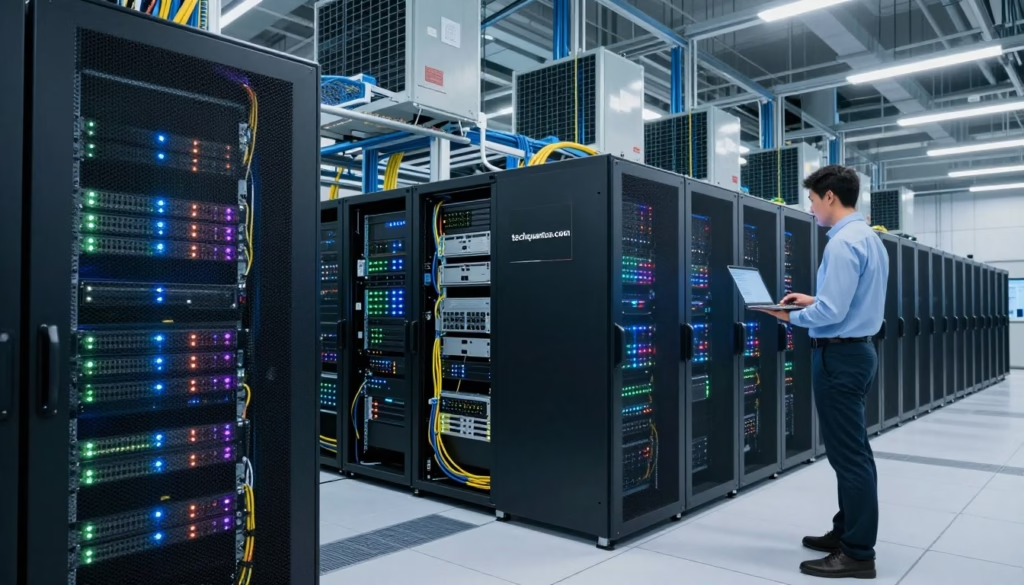
I outline the racks, fabrics and platform services that together support application uptime and performance.
Compute and application delivery
I describe x86 servers for day‑to‑day workloads and GPU/TPU clusters for AI. I right‑size resources to balance throughput, cost and resilience.
Application delivery uses load balancers, health checks and automatic failover to keep user experience steady during spikes.
Storage and backup
I map storage systems from NVMe for performance to capacity arrays and object stores. Regular backup with clear RPOs and RTOs preserves availability.
Network and facility systems
Leaf‑spine switches, routers and firewalls form the network fabric. I add diverse paths and segmentation to limit impact during faults.
Facility infrastructure includes UPS topologies, PDUs, generators and fire suppression so critical equipment remains protected and powered.
Cooling and management
Airflow, hot/cold aisle containment and liquid cooling options are chosen by rack thermal profiles and density.
DCIM and telemetry give me real‑time visibility into power, cooling and asset status so I act before incidents grow.
| Layer | Typical hardware | Primary goal |
|---|---|---|
| Compute | x86 servers, GPU/TPU clusters | Throughput and inference performance |
| Storage | NVMe, capacity arrays, object stores | Availability and tiered cost |
| Network | Leaf‑spine switches, routers, firewalls | Throughput and segmentation |
| Facility | UPS, PDUs, generators, suppression | Continuous power and protection |
Architecture and design principles that scale with the organisation
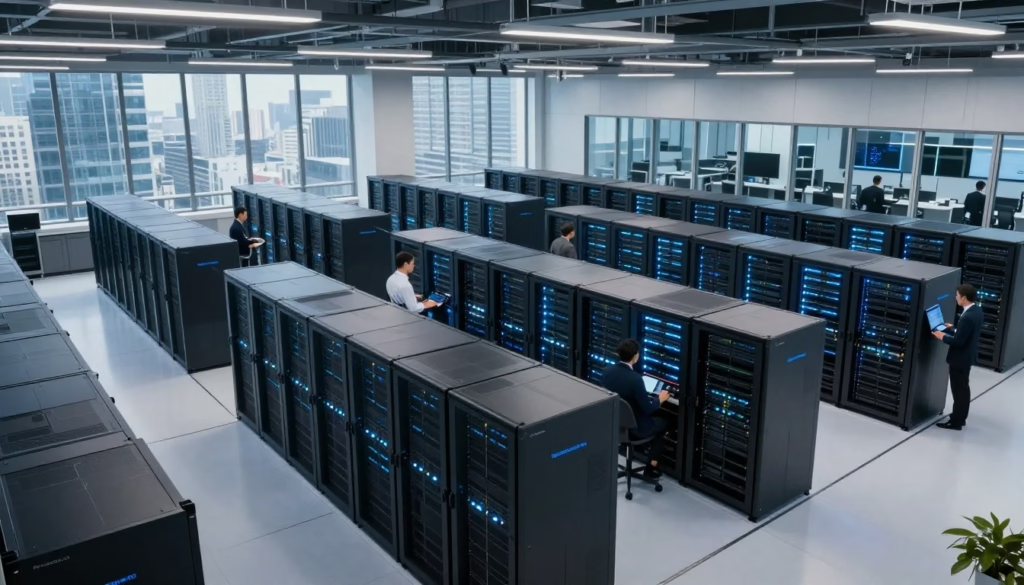
Choosing site, connectivity and rack layout early cuts delivery time and ongoing operational cost.
I set location criteria that favour stable power, available water for cooling where needed and multiple fibre routes. I favour low‑risk geographies to reduce exposure to seismic, flood and storm hazards.
Location, connectivity and access to resources
Site selection ties to regulatory and compliance checks, so I align permits, privacy rules like GDPR and sector regulations with project milestones.
I also assess utility resilience and nearby fibre. These factors shape redundancy needs and ongoing energy and water costs.
Layout and racking for airflow and maintenance
I design layouts to keep cold aisles and hot aisles clear, reduce cable congestion and preserve maintenance access. Good labelling and structured cabling speed moves, adds and changes.
Clear aisles and proper containment lower cooling load and reduce the risk of human error during service work.
Redundancy, resilience and tiers
I apply ANSI/TIA‑942 tier principles to match resilience to business needs. Tier 3 gives concurrent maintainability; Tier 4 provides fault tolerance with multiple independent paths.
My redundancy planning covers power trains, network paths and storage replication so one fault won’t cause an outage.
Sustainability and total cost
I model capital, energy and staffing to show lifetime costs. Efficient cooling, free cooling and high‑efficiency UPS choices cut operating costs and emissions.


Leaving headroom for growth means adding pods or extending feeds rather than costly retrofit work later.
- I prioritise stable utilities, fibre diversity and low‑risk locations.
- I standardise racks, containment and cabling to speed operations and reduce errors.
- I match tier level to availability needs and plan redundancy end to end.
- I balance upfront capital with lower long‑term energy costs and simpler scaling.
| Design area | Primary focus | Typical choice | Benefit |
|---|---|---|---|
| Site selection | Power, water, fibre, risk | Utility resilience, multiple fibre routes | Lower outage probability |
| Rack & layout | Airflow, cabling, access | Hot/cold containment, structured cabling | Reduced cooling needs, faster service |
| Redundancy | Availability and maintainability | Tier 3 or Tier 4 topologies | Matched SLA and reduced downtime |
| Sustainability | Energy and lifetime costs | Free cooling, efficient UPS, liquid cooling | Lower energy bills and emissions |
Operations and performance: how I keep the data centre running optimally
I combine telemetry and automation to spot and fix faults faster than manual checks allow. My operations model puts monitoring, rules and rehearsed responses at the centre of daily work.
DCIM and real‑time telemetry for capacity, PUE and incident response
DCIM gives me continuous visibility into energy, rack capacity and PUE so I act before a threshold is hit. I instrument power, cooling, servers and storage systems to correlate signals.
“Telemetry lets me prioritise fixes that prevent user impact, not just alarms.”
Optimised performance: load balancing, segmentation and latency reduction
I tune traffic with load balancing for north‑south and east‑west flows. Network segmentation and high‑speed fibre reduce latency and contain faults.
| Focus | Practice | Benefit |
|---|---|---|
| Telemetry | End‑to‑end instrumentation | Faster root‑cause analysis |
| Traffic | Load balancing & segmentation | Lower latency, higher resilience |
| Configuration | Golden images and standard builds | Predictable rollbacks |
Business continuity: disaster recovery planning, testing and failover
I run regular backups and restore tests so recovery points and times match application criticality. I script disaster recovery drills and validate automated failover to limit downtime.
- I tie security monitoring into operations so threats and performance anomalies are triaged together.
- I review SLAs with stakeholders and translate telemetry into clear business outcomes.
Security by design: physical and cyber controls for resilient operations
I design protection layers so physical and cyber risks are handled before they escalate. My approach treats security as an operational function that keeps services online and sensitive information safe.
Access control and identity: biometrics, logging and least privilege
I embed least‑privilege access with biometrics and role‑based permissions. Immutable logs prove who entered which area and when, which helps during audits and incident response.
Surveillance and environmental sensing for proactive protection
I deploy layered surveillance: HD cameras, motion detectors and IoT sensors for temperature and sound. These systems spot intrusions and thermal hotspots early, reducing the chance of equipment failure or costly downtime.
Network security and encryption across hybrid and multicloud
I build network segmentation, firewalls and intrusion detection that act consistently across on‑prem, edge and cloud. I encrypt data in transit and at rest, and integrate key management with separation of duties.
Compliance frameworks: FISMA, GDPR and sector requirements
I map controls to FISMA and GDPR, ensuring policies are enforced via automation and audit trails meet industry rules. Regular drills and red‑team exercises validate incident response and reduce human error.
| Control area | Practice | Benefit |
|---|---|---|
| Access & identity | Biometrics, RBAC, immutable logs | Strong proof of access and swift forensics |
| Surveillance | HD cameras, motion, environmental sensors | Early anomaly detection, reduced downtime |
| Network & encryption | Segmentation, firewalls, KMS | Consistent protection across centres and cloud |
| Governance | Compliance mapping, automated enforcement | Auditability and lower operational risk |
Energy efficiency and cooling strategies to reduce costs and emissions
My approach targets measurable energy savings through smarter cooling and control. I track a single metric closely: PUE. Real‑time monitoring lets me see where energy is wasted and act quickly.
Measuring and improving PUE with real‑time monitoring
I track PUE in real time and use the readings to prioritise work that lowers both emissions and costs. DCIM ties power metres to racks so I can spot under‑utilised equipment and change set‑points safely.
Efficient cooling: containment, free cooling and immersion
I implement hot/cold aisle containment to stop air mixing and stabilise inlet temperatures. Where climate permits, I use free cooling to cut the mechanical load.
For high‑density racks driven by AI, I evaluate liquid and immersion cooling. GPUs can consume 10–15× more power per processing cycle than CPUs, so thermal design must match the load.


Virtualisation and renewable integration for sustainability
I consolidate workloads with virtualisation to reduce the number of hosts and lower energy and cooling requirements. I also integrate renewable supply and negotiate green tariffs to reduce carbon and long‑term costs.
| Practice | Target | Benefit |
|---|---|---|
| Real‑time PUE monitoring | Continuous visibility | Prioritise high‑impact savings |
| Hot/cold containment | Stable inlet temps | Lower cooling energy |
| Free & liquid cooling | Climate‑aware selection | Cut mechanical load for dense racks |
| Virtualisation & renewables | Right‑sized resources | Lower costs and emissions |
I quantify savings from each change and tune set‑points seasonally. Continuous targets keep management focused on long‑term efficiency and reliable operation of the data center.
Modern data centres: types, workloads and where compute lives now
I map where workloads run today and why that placement shapes performance, cost and risk.
Hybrid and multicloud lets me run cloud‑native apps across on‑prem racks, public clouds and edge sites while keeping controls consistent. I use containers, service meshes and API‑driven management to move workloads without breaking automation.
AI facilities and high‑density computing
AI data centres house GPU and TPU clusters with low‑latency fabrics. These rooms need higher power and specialised cooling to support parallel computing at scale.
Edge for real‑time processing
Edge centres place compute close to users for content delivery and instant analytics. I choose small facilities where latency is critical and shift aggregation to larger centres when it makes sense.
Service models and interoperability
I compare enterprise, colocation, cloud and managed services based on workload risk, budget and compliance. Standards and networking overlays let me manage distributed systems as a single environment.
| Type | Typical equipment | Primary need |
|---|---|---|
| Enterprise | Racks, servers, storage | Control, compliance |
| Colocation | Shared racks, PDUs, network | Cost and scale |
| Cloud | Virtualised servers, object storage | Elastic scalability |
| Edge | Compact servers, cache storage | Low latency |
Planning note: I align storage and servers with data gravity so large datasets stay near the compute that uses them. I also plan capacity across locations to preserve scalability, backup and resilience.
Conclusion
I finish by stressing practical steps that turn strategy into resilient, efficient centre operations.
I recap the stack from compute and storage to facility infrastructure so reliability and performance are joined at the design phase. Security and access controls sit beside surveillance and network controls to protect services and compliance.
DCIM, telemetry and disciplined operations keep capacity, PUE and backup plans aligned to business needs. Location, layout and redundancy choices guided by ANSI/TIA‑942 help balance risk, cost and scalability.
Plan a roadmap that sequences energy and cooling strategies for high‑density computing, tests failover, and adopts standards and automation to manage distributed centres with confidence.
FAQ
What is a modern data centre and how does it differ across on‑premises, edge and multicloud?
I see a modern facility as a flexible platform that spans on‑premises sites, edge locations and public cloud. On‑premises gives full control over servers, storage and networking. Edge sites bring compute close to users for low latency, while multicloud lets organisations place workloads where cost, performance and compliance align. Design choices change with each model: power and cooling needs, connectivity and security controls vary significantly.
Which hardware elements are essential for compute and application delivery?
I consider servers, accelerators like GPUs or TPUs, and load balancers as core. Servers host virtual machines and containers. Accelerators handle AI and specialised compute. Application delivery uses software load balancing, CDNs and network functions to ensure resilience and scale. Proper rack layout and cabling also affect performance and maintenance.
How should I approach storage and backup to guarantee availability?
I recommend a mix of primary flash storage for performance and dense disk for capacity, with object storage for archives. Implement synchronous replication for critical services and asynchronous replication for longer distances. Regular backups, immutable snapshots and tested restore procedures reduce downtime and protect against ransomware.
What network infrastructure is required for robust connectivity and security?
I focus on redundant switches, routers and firewalls, plus diverse physical paths for fibre. Segmentation, zero trust principles and encrypted links protect traffic across sites. Monitoring and path diversity reduce single points of failure and help sustain low latency for distributed applications.
What power systems should be in place to ensure continuous operation?
I deploy n+1 or better UPS systems, PDUs with metering, and automatic transfer to diesel or natural‑gas generators. Power distribution must match rack density and future growth. Battery management and fuel contracts are crucial for sustained outages.
How do cooling strategies vary and what options should I consider?
I use hot/cold aisle containment to control airflow, complemented by variable‑speed chillers, economisers for free cooling and, in high‑density deployments, liquid cooling or immersion. Choice depends on locality, energy costs and thermal load from accelerators.
What management tools help run a facility efficiently?
I rely on DCIM platforms for asset tracking, capacity planning and environmental telemetry. Automation for provisioning, monitoring for PUE and alarms for thresholds improve uptime. Integrating IT and facilities data streamlines incident response.
How do I plan layout and racking to support airflow and maintenance?
I design aisles and rack spacing to enable containment and easy access. Cable management, labelled power feeds and service aisles reduce mean time to repair. Planning for modular growth simplifies future upgrades.
What redundancy and resilience standards should guide design?
I use ANSI/TIA‑942 tiers and industry best practices to set redundancy targets. N+1, 2N and geographic replication models apply depending on required SLAs. Regular testing and documented failover procedures validate resilience.
How can I improve energy efficiency and lower total cost of ownership?
I measure PUE, optimise airflow and adopt efficient IT gear. Virtualisation consolidates workloads, while renewable energy procurement and demand‑response strategies cut emissions and operating costs. Continuous monitoring reveals optimisation opportunities.
Which operational practices reduce incidents and keep performance high?
I implement proactive maintenance, firmware management and telemetry for capacity planning. Load balancing, network segmentation and latency monitoring preserve performance. Scheduled drills for disaster recovery ensure plans work under pressure.
What physical and cyber security controls are essential?
I combine access control with biometrics, CCTV and environmental sensors for physical protection. Cyber controls include segmentation, MFA, encryption and strict identity management. Auditing and logging support compliance and forensic analysis.
Which compliance frameworks matter for regulated sectors?
I follow GDPR for data protection, FISMA for federal systems where applicable, and industry standards such as ISO 27001. Sector rules for finance, healthcare and telecommunications add specific controls around data residency and retention.
How do I support AI workloads and higher power densities?
I plan for increased power per rack, specialised cooling like liquid immersion, and low‑latency fabrics such as InfiniBand or RDMA‑capable Ethernet. Capacity planning must account for rapid scaling and power provisioning.
What role do edge facilities play in modern deployments?
I use edge sites for real‑time analytics, content delivery and industrial control. They reduce latency and bandwidth use by processing data nearer the source. Design emphasises compact power, efficient cooling and secure remote management.
How do hybrid and multicloud strategies affect architecture choices?
I design for portability and interoperability, using APIs, cloud‑native services and consistent security policies. Data placement considers cost, latency and compliance. Networking and identity federation are key enablers.
What monitoring metrics should I track for efficiency and capacity?
I monitor PUE, inlet/outlet temperatures, rack power, network utilisation and storage IOPS. Trending helps forecast needs and triggers optimisation actions before capacity becomes critical.
How can I ensure business continuity and effective disaster recovery?
I maintain documented recovery plans, geographically diverse replication and regular failover tests. RTO and RPO targets guide infrastructure choices, and runbooks ensure staff execute recovery reliably.
What standards and interoperability concerns support distributed operations?
I adhere to standards like Open Compute, ANSI/TIA and industry APIs to ease hardware and software integration. Interoperability reduces vendor lock‑in and simplifies hybrid, multicloud and colocation deployments.
How do I balance sustainability with performance and cost?
I assess lifecycle costs, invest in efficient hardware and pursue renewable energy contracts. Optimising cooling and adopting virtualisation keeps performance while lowering emissions and operational spend.
Related posts:
 CISSP Domain 2: Guide to Asset Security Fundamentals
 Top 7 Free Web Tools to Boost Productivity
 Boost Your Internet Speed: Advanced Techniques
 Quantum Computing Basics for Beginners: A Simplified Guide
 I Use Prompt Engineering Templates That Work Across ChatGPT, Gemini, Claude & Grok
 I Use Small Business AI Stack: Affordable Tools to Automate Support, Sales, Marketing